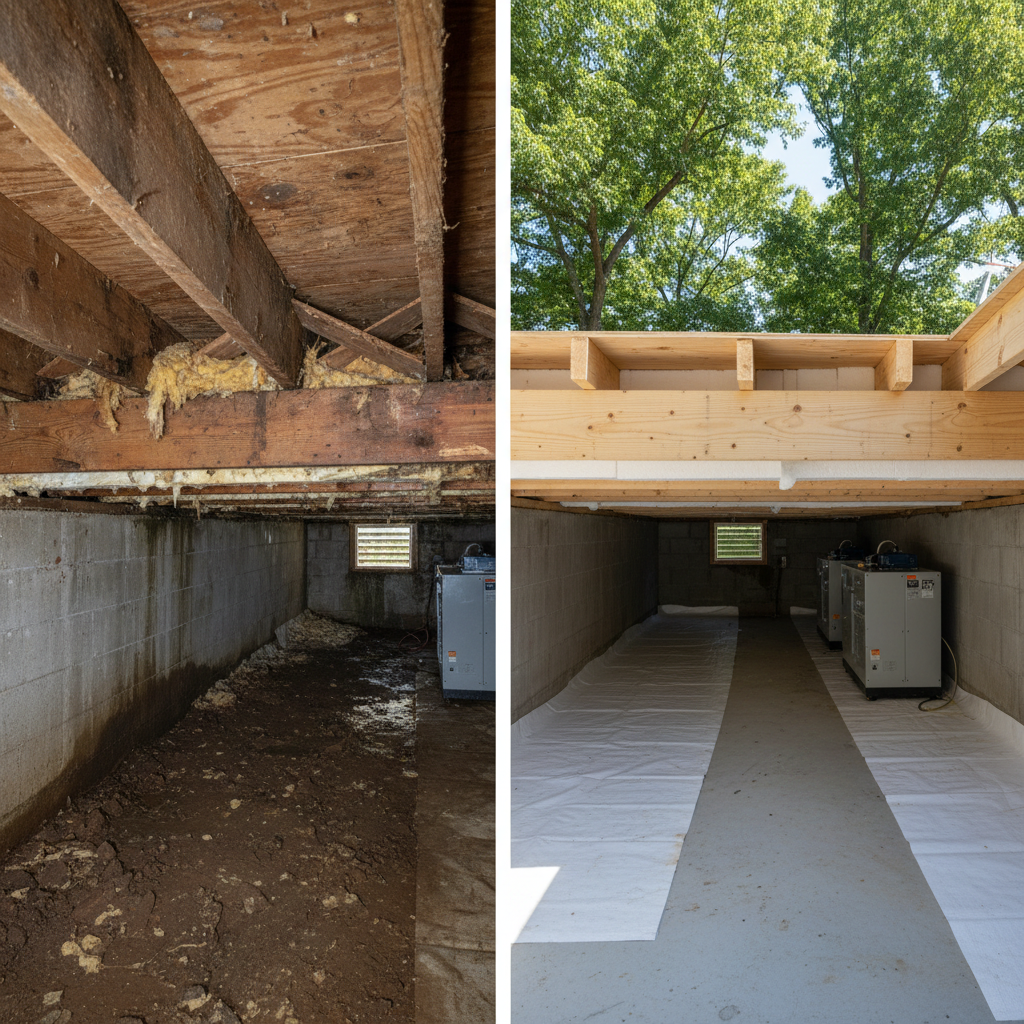
Alright, let's talk about what happens when water gets where it shouldn't – specifically, inside your walls or under your floors. It's a mess, I know. And once the leak's fixed, the big question is always: how do we dry this out without making things worse? You've generally got two main paths: drying everything in place, or tearing out the wet stuff and rebuilding. As someone who's been crawling through Eastover crawl spaces and attics for years, I've seen both done right and, frankly, done wrong. Let's get into it.
What is In-Place Structural Drying?
This is exactly what it sounds like. We bring in some serious equipment – industrial-strength air movers, dehumidifiers, sometimes even specialized injecti-dry systems – and we dry out the wet materials right where they are. Think of it like a really powerful, targeted blow-dryer for your house. We're talking about drying out drywall, insulation, subflooring, and framing without tearing them apart.
The Good Side of In-Place Drying:
- Less Invasive, Less Mess: This is the big one. We don't have to demo your walls, rip up your floors, or create a ton of dust and debris. It means less disruption to your daily life. You can often stay in your home, which is a huge plus, especially for families.
- Faster Turnaround: Because there's no demolition or reconstruction involved, the drying process, once complete, means you're pretty much done. No waiting for new drywall to be hung, taped, mudded, sanded, and painted.
- Potentially Lower Cost: Fewer labor hours for demolition and rebuild, and less material waste, can often translate to a lower overall bill. You're paying for specialized equipment and expertise, not for framing and finishing crews.
- Maintains Original Finishes: If your drywall or flooring wasn't too badly damaged, drying it in place means you keep your existing finishes. No need to match paint or flooring.
The Downside of In-Place Drying:
- Not Always an Option: If the water sat for too long, or if the materials are just too saturated and compromised (like heavily soaked insulation that's fallen apart), in-place drying might not be effective or safe. We've got to make sure there's no mold growth already happening.
- Requires Monitoring: It's not a set-it-and-forget-it deal. We're constantly monitoring moisture levels with specialized meters to ensure everything is drying properly and completely. This takes time and expertise.
- Can Be Slower to Dry: Sometimes, especially with very dense materials or in areas with high humidity (which we get plenty of here in Eastover, especially near the river or in older homes with less-than-perfect vapor barriers), it can take a few extra days for everything to hit those dry standards.
What is Tear-Out & Rebuild Drying?
This approach involves removing the wet, damaged materials. If your drywall is soaked and sagging, or your insulation is a soggy mess, we cut it out. If the subfloor is buckling, we pull it up. Then, once the wet materials are gone, we dry out the remaining structure (like the wall studs or floor joists) and eventually rebuild with new materials.
The Good Side of Tear-Out:
- Guaranteed Dryness: When you remove the wet stuff, you're getting rid of the problem directly. It's a very straightforward way to ensure no hidden moisture is left behind.
- Mold Prevention: If there's any suspicion of mold, or if materials have been wet for too long, tearing them out is often the safest bet to prevent future mold issues. You're removing the food source and the moisture.
- Inspection Access: Taking things apart gives us a clear view of the structural components behind the walls or under the floors. We can inspect for any hidden damage, rot, or even pest issues that might have been caused or exacerbated by the water.
The Downside of Tear-Out:
- Major Disruption: This is the big one. It's noisy, dusty, and your home becomes a construction zone. You might need to move out temporarily, which adds to the cost and stress.
- Higher Cost: More labor for demolition, debris removal, and then all the reconstruction work (framing, drywall, paint, flooring, etc.) means a higher bill.
- Longer Project Time: Demolition, drying, rebuilding – it all takes time. You're looking at weeks, sometimes months, depending on the extent of the damage.
- Matching Issues: Trying to match existing paint colors, wallpaper, or flooring can be a real headache. Sometimes, you end up having to redo larger areas than just what was damaged to make it look right.
So, Which One's Right for Your Eastover Home?
Look, there's no one-size-fits-all answer. As a local business, Paradise Restoration, we see a lot of water damage from burst pipes in winter, or heavy summer storms that overwhelm gutters and foundations. The soil here, especially in some of the older neighborhoods with clay-heavy earth, can hold a lot of moisture, which means we've got to be extra careful about drying things out completely.
Here's my honest take:
- If the water damage is relatively clean (from a burst pipe, not a sewage backup), caught quickly (within 24-48 hours), and the materials aren't visibly degraded or showing signs of mold, I'm usually going to recommend in-place drying first. It saves you money, time, and a whole lot of headache. We can get our equipment in there, monitor it closely, and get your home dry and safe without tearing it apart.
- If the water has been sitting for a while (more than 72 hours), if it's from a contaminated source, or if materials are already visibly warped, sagging, or showing any signs of mold, then tear-out is the only responsible choice. You can't risk leaving hidden moisture or mold in your home. It's more expensive and disruptive upfront, but it prevents much bigger, more costly problems down the road.
Ultimately, when I come out to your home, I'm going to assess the situation thoroughly. We'll use our moisture meters, thermal cameras, and our experience to figure out the best, safest, and most cost-effective path forward for you. My goal, and the goal of everyone at Paradise Restoration, is to get your home back to normal – or better – as quickly and efficiently as possible, without cutting corners that could bite you later.